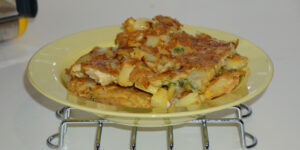
Does Acrylamide Produced While Frying Starchy Foods Increase Cancer Risk?
The classification of acrylamide as a potential health concern stems from a divergence in evidence between laboratory and human studies.

The classification of acrylamide as a potential health concern stems from a divergence in evidence between laboratory and human studies.
The relationship between acrylamide and cancer risk is an active area of scientific research, where findings from animal studies have raised concern, but direct evidence in humans remains inconclusive.
What is Acrylamide?
Acrylamide is a chemical that forms naturally in certain starchy foods during high-temperature cooking processes like frying, roasting, and baking (typically above 120° Celcius). It is the result of a reaction between sugars and an amino acid (asparagine) in the food. Major dietary sources include potato chips, French fries, coffee, and baked goods like bread, cookies, and crackers. Acrylamide is also present in tobacco smoke, and smoking is a significant source of exposure for those who smoke.
The Scientific Evidence: Animal Studies vs. Human Data
Exposing rodents to high doses of acrylamide in their drinking water has been shown to cause cancer in laboratory studies. This led the International Agency for Research on Cancer (IARC) to classify acrylamide as a Group 2A (probable human carcinogen). The mechanism is thought to involve its metabolism to a compound called glycidamide, which can bind to DNA and cause mutations.
Despite the findings in animals, large-scale epidemiological studies in humans have not found a consistent or clear link between dietary acrylamide intake and increased cancer risk. A comprehensive meta-analysis of such studies found that the overall risk for most cancers was close to zero. For example, a large European study found no convincing evidence that higher acrylamide exposure increased the risk for endometrial or ovarian cancers.
Some studies have suggested a possible association with specific cancers, such as kidney cancer, but these findings require further investigation. Experts note that all epidemiological studies to date have failed to show an increased cancer risk, even from high-level occupational exposure.
Risk Assessment and the Margin of Exposure
A key concept for understanding the potential risk is the “Margin of Exposure”. This is a tool used by food safety authorities to assess health risks. A lower margin of exposure (MOE) indicates a higher potential risk. For carcinogenic effects, a MOE below 10,000 is considered a potential concern for human health.
Recent dietary exposure studies have calculated MOE values significantly lower than 10,000, suggesting a potential concern that cannot be dismissed. For instance, a study in a Chinese population found MOE values around 1,200, while a study of a university cafeteria found values that also pointed to a potential carcinogenic risk.
What is the Practical Cancer Development Risk in Acrylamide Exposure?
While animal and risk assessment models can produce theoretical cancer estimates, these are often considered conservative. The actual risk to humans from dietary acrylamide may be considerably lower due to the body’s ability to repair DNA damage and detoxify the chemical at low exposure levels. One older assessment calculated a lifetime risk of 6 in 10,000 individuals, but emphasized that this was a conservative estimate and the true risk could be much lower.
Experts and health organizations generally agree that for the general public, the level of acrylamide in a typical diet is not a high concern for neurotoxicity or reproductive toxicity. Furthermore, recommendations to completely avoid foods that contain acrylamide—like whole-grain breads or roasted vegetables—are not advised, as this could lead to nutritional imbalances.
Practical Steps to Reduce Exposure
For those who wish to minimize their acrylamide intake, simple cooking and storage practices can be effective.
Aim for “Golden, Not Brown” – Cook potato and cereal products to a light golden color rather than a dark brown. Avoid over-browning or charring.
Soak Potatoes – Soak raw potato slices in water for 15-30 minutes before frying or roasting to reduce the sugar content that forms acrylamide.
Cook with Moisture – Use cooking methods like boiling, steaming, or microwaving, which do not produce significant amounts of acrylamide.
Proper Storage – Store potatoes in a cool, dark place (above 6°C), but not in the refrigerator. Refrigeration can increase sugar levels, which in turn can lead to more acrylamide formation during cooking.
Conclusion
While there is strong evidence that high levels of acrylamide cause cancer in animals, the evidence that the lower amounts found in a typical diet increase cancer risk in humans is not conclusive. The scientific consensus is that while the risk cannot be ruled out, it is likely small. For most people, the main source of acrylamide exposure is not food, but tobacco smoke. Practicing healthy cooking habits to avoid heavy browning is a sensible, low-harm way to potentially reduce exposure.